A filter class is not a complete selection
Respiratory protection begins with identifying contaminants, concentrations and oxygen conditions. A familiar label cannot replace those facts.
Unknown or potentially immediately dangerous atmospheres need specialist assessment and appropriate procedures. Do not select a disposable facepiece from this guide for entry.
Start with the contaminant, not the mask shape
Particles, gases and vapours require different selection decisions. A particulate filter does not become a gas filter because it fits well or has a high efficiency classification. An air-purifying respirator also does not supply oxygen. The employer or competent assessor must identify the hazard, evaluate exposure and determine whether respiratory protective equipment is appropriate after other controls have been considered.
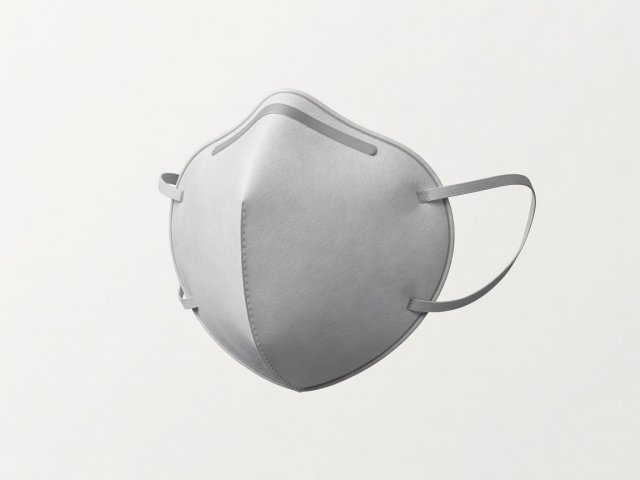
Selection must account for concentration, required protection, work rate, duration, temperature, compatibility and the wearer’s ability to use the equipment. A surgical mask and a respirator are not interchangeable categories. Fluid resistance, source control and occupational respiratory protection are separate claims that require their own evidence. Appearance is not a reliable way to distinguish them.
Follow a US approval to the exact configuration
NIOSH approves respirators under 42 CFR Part 84. For an N95 filtering facepiece, the N-series designation concerns use in environments without oil aerosols, while the 95 classification refers to a minimum filtration efficiency under specified certification test conditions. It does not promise that the wearer will inhale 95 percent less of every contaminant, and it does not establish gas or vapour protection.
Use the NIOSH Certified Equipment List and official guidance to investigate the manufacturer, model and approval identifier. For reusable respirators, the approved configuration matters: facepiece, filters or cartridges, retainers and other components may form a specified assembly. A cartridge that attaches to a facepiece is not necessarily an approved combination. Counterfeit or misrepresented products can copy visible wording, so a matching-looking label is only the beginning of verification.
Read European references on their own terms
EN 149 addresses filtering half masks to protect against particles, including the FFP classifications. EN 143 addresses particle filters, while EN 14387 addresses gas filters and combined filters. These references describe different products and performance questions. A filter reference does not, by itself, establish the suitability or conformity of every complete respirator on which it might be mounted.
Do not treat N95, FFP2 and other national classifications as automatic legal or technical equivalents. Their tests and conformity frameworks differ. Similar nominal filtration figures do not settle fit, inward leakage, use conditions or acceptance in a particular workplace. Check the standard edition, manufacturer’s instructions, declaration and any required conformity-assessment evidence for the destination market.
OSHA 29 CFR 1910.134 governs respiratory protection in general industry, including program requirements where applicable. Product approval is not the same thing as employer compliance.
Regulation (EU) 2016/425 provides the PPE product framework. Verify the declaration, applicable category and required notified-body involvement rather than interpreting CE alone as a suitability decision.
Check current product-market guidance for Great Britain or Northern Ireland and workplace duties under the relevant rules. HSE’s respiratory protective equipment guidance helps explain selection and management.
Separate a fit test from a seal check
A tight-fitting respirator requires an adequate seal to the wearer’s face. Under the applicable program, a fit test assesses whether a particular make, model, style and size fits that person using an accepted method. A user seal check is performed when donning according to the instructions. It is not a replacement for fit testing.
Facial hair in the sealing area, incompatible eyewear or incorrect strap positioning can compromise a tight-fitting facepiece. Medical evaluation, training and program requirements also matter. Alternative equipment may be necessary where a suitable tight fit cannot be obtained; that decision still requires an appropriate assessment rather than an improvised modification.
| Evidence | Supports | Does not prove |
|---|---|---|
| NIOSH approval record | Approval of an identified configuration | Authenticity of every item offered by a seller |
| Particulate classification | Specified particle-test performance | Gas, vapour or oxygen-deficiency protection |
| Fit-test result | Fit of a particular respirator on a particular wearer | Correct donning and use on every occasion |
Plan replacement before use
For gas and vapour cartridges, establish an appropriate change schedule or use suitable end-of-service-life information under the applicable program. Do not rely on smell as a universal warning. For particle filters and disposable facepieces, follow instructions and program rules for damage, contamination, breathing resistance, storage and reuse. Document component compatibility and replacement stock before the first order is approved.